What Makes a Period Underwear Manufacturer Suitable for Private Labels?
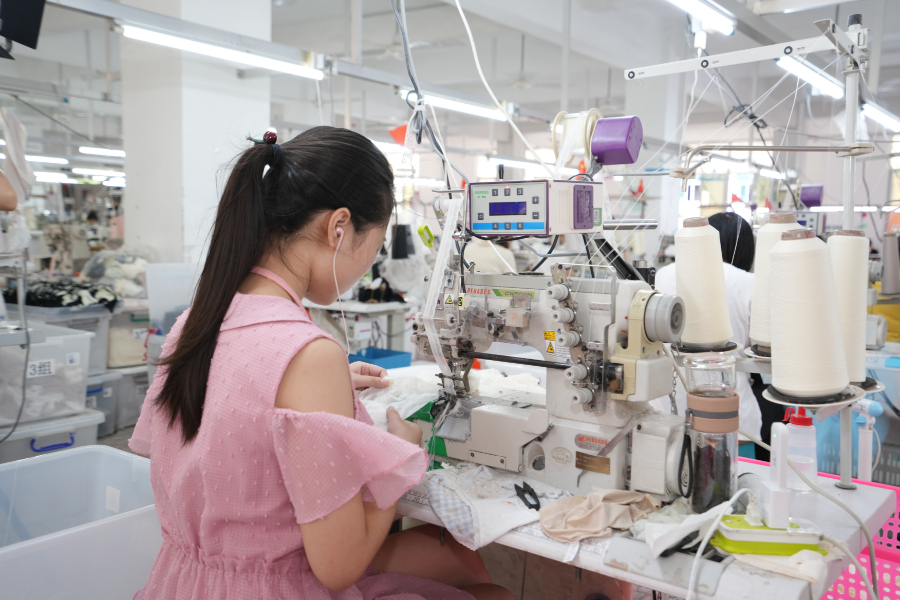
A period underwear manufacturer is suitable for private labels when it can control fabric, absorbent layers, waterproof membranes, sizing, labeling, testing, and repeat production under one documented specification. A buyer should look beyond MOQ and unit price: body fabric may range around 160–220 GSM, absorbency targets may run from 10–40+ mL, and a five-size, four-color launch already creates 20 SKU combinations. In 2025, California also began restricting regulated PFAS in textile articles, including undergarments. A reliable supplier should therefore provide traceable materials, measurable wash and leakage performance, compliant labeling, controlled tolerances, and written approval before material substitutions.
Private-label period underwear is closer to a technical textile product than ordinary underwear because the gusset has several jobs at once. A normal brief may use one primary knitted body fabric plus lining, while period underwear can combine a skin-contact layer, one or more absorbent layers, a leak-resistant membrane, and an outer fabric. A body fabric around 170–210 GSM may feel light enough for daily wear, while adding a 250 GSM absorbent layer can change thickness, drying time, stretch, and seam behavior.
That construction makes material specifications more useful than descriptions such as “soft cotton” or “high absorbency.” A specification should state fiber composition, GSM tolerance, elastane percentage, usable fabric width, membrane type, gusset dimensions, and the approved supplier or material reference. If an approved fabric is 95% cotton and 5% elastane at 190 GSM, replacing it with a visually similar 175 GSM fabric can change coverage, recovery, opacity, and fit even when the finished sample looks acceptable.
Fit then becomes part of leakage performance rather than a separate styling issue. A leg opening that stretches too easily can leave a gap beside the gusset, while excessive elastic tension may make the garment uncomfortable after several hours. Brands producing five or six sizes should approve a complete size set instead of checking only a medium sample, because grading errors of even 1–2 cm around the rise or leg opening can move the absorbent zone away from the intended position.
A useful approval sample should represent the planned bulk construction: the same fabric weight, membrane, absorbent material, elastic specification, stitching method, and gusset dimensions. A prettier prototype made from substitute materials gives very little information about repeat production.
Absorbency also needs a defined measurement method. “Holds 30 mL” is incomplete unless the buyer knows whether 30 mL describes total saturation, usable absorption before leakage, or repeated liquid application under pressure. A manufacturer can test several specimens from the same construction—for example, 5 or 10 samples—rather than reporting the strongest result from one garment. Recording average capacity, lowest capacity, absorption time, and surface rewet provides much more usable information.
The same principle applies to water resistance. A waterproof membrane can stop direct liquid penetration while the garment still leaks through seams, edges, or an undersized protective zone. AATCC lists TM127 for hydrostatic-pressure water resistance and TM195 for liquid moisture-management properties; TM135 and TM150 address dimensional changes after home laundering for fabrics and finished garments. A supplier familiar with established textile methods is easier to audit than one using an undefined “factory test.”
Washing should therefore be part of product approval, not an afterthought. Reusable underwear may look normal after the first wash but develop shrinkage, elastic relaxation, membrane separation, or altered absorbency after repeated laundering. A practical development program can compare unwashed garments with samples after 5, 10, 20, or 30 wash cycles, using the same detergent, machine program, temperature, and drying method for every sample.
AATCC notes that standardized laundering uses controlled detergents, machines, and ballast so results can be compared from one test to another. Commercial detergents can vary by region and formulation, which adds another variable. A private-label factory does not need to own every laboratory instrument, but it should be able to send representative samples to an accredited third-party lab and retain the report with the purchase order.
| Production item | Useful control point | Example requirement |
|---|---|---|
| Body fabric | Weight and composition | 190 GSM ±5%; 95/5 fiber blend |
| Absorbent zone | Capacity and dimensions | 25 mL target; approved gusset length |
| Finished sizing | Garment measurements | Agreed tolerance by measurement point |
| Washing | Dimensional stability | Compare before/after defined wash cycles |
| Bulk inspection | Random sample checks | Agreed AQL or brand inspection standard |
Once the product specification is measurable, MOQ becomes easier to evaluate. “MOQ 500 pieces” can mean 500 units for one style, 500 per color, or 500 per color per size. A style offered in four colors and five sizes contains 20 SKU combinations; an MOQ of 300 units per color requires 1,200 garments, while 300 per color and size would require 6,000. Buyers should request the MOQ structure in writing before paying for development.
Component minimums can be higher than the garment MOQ. Custom-dyed fabric may require hundreds of kilograms, branded jacquard elastic may have its own production minimum, and printed retail boxes may be ordered in several thousand pieces. A suitable supplier should separate garment MOQ from fabric, elastic, label, and packaging minimums so a brand can calculate inventory before confirming colors.
The same level of detail should appear in lead times. A claim such as “30-day production” is useful only when it states when the 30 days begin. Fabric knitting, dyeing, printing, lamination, waistband production, bulk cutting, sewing, inspection, and packing may sit on separate schedules. Stock fabric can shorten development, while a custom color or custom elastic can add several weeks before sewing begins.
For comparison, a buyer can request dates for sample approval, material booking, material arrival, cutting, inline inspection, final inspection, and shipment readiness. A supplier that updates these dates when specifications change gives the private label enough information to manage launches without relying on one estimated completion date.
Material traceability matters more as order volume rises. For an order of 10,000 units, recording the fabric lot, membrane lot, absorbent-material lot, elastic batch, production line, and packing date allows a complaint to be traced to a smaller production group. Without lot records, one repeated fault may require checking thousands of garments that were made with different material batches.
Traceability should also cover substitutions. If an absorbent material is unavailable, the replacement should be tested and approved before bulk use. No material substitution should be treated as automatically equivalent because it has the same fiber name or similar appearance. A change in GSM, knitting structure, finish, membrane thickness, or elastane performance can alter the finished product.
Chemical documentation has become more relevant for brands selling in the United States. California AB 1817 prohibits regulated PFAS in new textile articles from January 1, 2025 and defines apparel to include undergarments. The law sets a total-organic-fluorine threshold of 100 ppm beginning in 2025, reducing to 50 ppm beginning in 2027, while also covering intentionally added PFAS with a functional or technical effect. Manufacturers must provide a certificate of compliance to sellers or distributors.
A private-label buyer should therefore ask for chemical declarations covering more than the face fabric. The membrane, print, stain-resistant finish, elastic, bonding materials, and other treated components may come from different upstream suppliers. A factory that maintains supplier declarations, test reports, material specifications, and production records can answer compliance questions with documents rather than verbal statements.
Labeling requires similar discipline. Under the U.S. Federal Trade Commission Care Labeling Rule, manufacturers and importers of covered textile wearing apparel must provide regular care instructions, and they need a reasonable basis for those instructions before sale. The FTC also requires permanent care information to remain available through the garment’s useful life, subject to stated exemptions. A private-label manufacturer supplying the U.S. market should be able to produce labels from approved wording and prevent old label versions from entering a new order.
Packaging needs its own specification because a correctly sewn garment can still arrive as the wrong retail SKU. A five-size range in four colors creates 20 combinations before packaging variants are counted. Carton checks should compare size, color, barcode, quantity, polybag or paper packaging, carton marks, and purchase-order reference. For marketplace or retail programs, one wrong barcode can place a correct product under the wrong inventory record.
Quality checks work better when they occur during production rather than only after packing. Incoming fabric can be checked for width, shade, defects, and GSM; first finished pieces can be measured before full sewing continues; inline inspections can review seam construction and gusset placement; final random inspection can then check workmanship, measurements, labeling, and packing. If 5% of the first 200 garments show the same sewing issue, correcting the process at that point is easier than reworking a completed 10,000-piece order.
Private-label capability also includes development records. Pattern versions, measurement charts, approved colors, bill of materials, artwork, label files, packaging files, and pre-production samples should carry dates or revision numbers. A 2026 reorder should be reproducible from the approved records without depending on one employee remembering how a 2025 order was made.
Suppliers such as Ljvogues can be evaluated with the same measurable framework: request material specifications, sample construction details, MOQ by component, production records, testing options, packaging capability, and documented procedures for repeat orders. Brand size should not change the standard used to compare manufacturers; a 1,000-piece launch and a 20,000-piece reorder both depend on consistent specifications.
Commercial terms should be compared only after technical requirements match. A quotation that is 8% lower may use a different fabric weight, simpler packaging, fewer inspections, or a less expensive absorbent construction. Buyers should compare unit cost together with sample fees, testing, custom-dye charges, labels, packaging, inspection, freight terms, and payment schedule. EXW, FOB, and DDP prices cannot be compared as the same delivered cost.
Production capacity is the final check because repeat orders often expose limits that a first sample does not show. Ask how many period-underwear units the factory actually produces per month, how much capacity is already booked during peak periods, and which processes are outsourced. A supplier is better suited to private labels when the approved 2,000-piece product can be reproduced at 10,000 or 30,000 pieces without changing materials, tolerances, testing, or documentation.